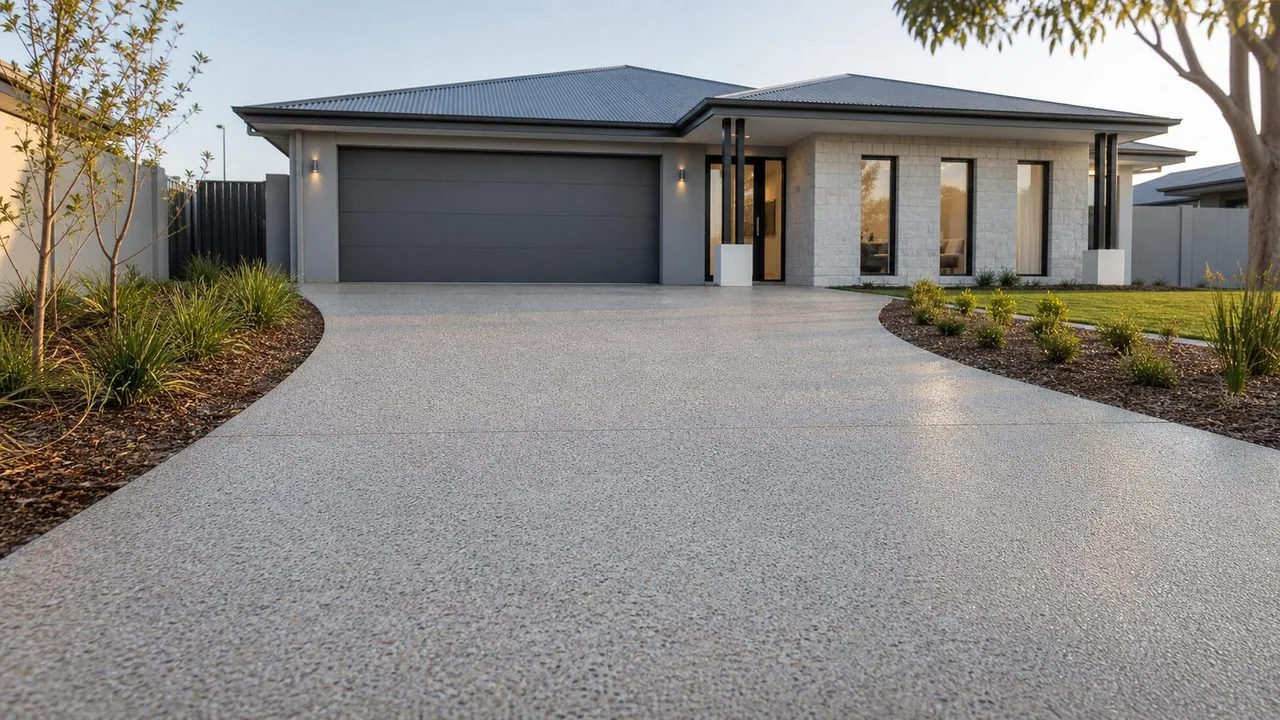
Decide what a successful match means to you
Start by separating three possible goals: an almost continuous appearance, a coordinated addition that is visibly newer, or a deliberate contrast. These are different design briefs. If you simply ask for matching concrete, the contractor may interpret that as a similar colour and texture while you expect an invisible join. Discuss the expectation before choosing a mix or comparing prices.
Look at the driveway from the places you normally see it. The street view may emphasise the whole shape, while the view from the front door makes the boundary more obvious. Consider whether the new area has a distinct function, such as side parking or a path. A visible change can make sense when it follows that function rather than appearing as an arbitrary patch.
Collect photographs of examples you like, but explain what appeals to you in each one. It might be the border, the aggregate size or the way a garden edge separates areas. A photograph is a reference for appearance, not proof that a particular mix will look the same at your property. The useful outcome is an agreed visual direction that can be tested with relevant samples.
Read the existing surface before choosing the new one
An older driveway carries its material history and its exposure history. Look for areas that stay shaded, tyre paths, previous repairs, stains and differences near the edges. A patch under a parked vehicle may not represent the surrounding surface. Compare several areas before deciding which colour the extension should reference. Record whether the driveway is plain, coloured, exposed aggregate or has a separate coating.
Find any original documents that identify the concrete supplier, mix, colour, aggregate, finishing method or sealer. These records can narrow the options, but they do not guarantee that current materials or the weathered surface will be identical. Ask the contractor which details can be reproduced and which remain uncertain. That is more useful than relying on a familiar product name alone.
Assess condition separately from appearance. A sound but discoloured surface presents a different decision from concrete with movement or failing repairs. If the existing edge is damaged, it may need a defined cutback or another treatment before the extension can be considered. Do not let the desire for a close colour match hide a support, level or drainage problem at the very boundary you are trying to make less noticeable.
Understand the sources of visible difference
Concrete appearance comes from more than pigment. Cement, sand and aggregate contribute, as do finishing and curing. An exposed aggregate surface also depends on which stone is visible and how it is exposed. Even a carefully selected mix should be discussed with an allowance for variation rather than described as a printed colour swatch that can be reproduced exactly.
The old surface has also aged. Cleaning, weather, traffic and previous treatments can change how it looks beside new work. A wet surface may appear different from the same surface when dry. Compare like conditions when judging samples, and avoid making a final decision from a newly placed or temporarily wet patch. Ask the contractor when the sample is suitable for the comparison you want to make.
CCAA's construction guidance treats surface finish control and curing as related construction topics. For a homeowner, the practical implication is to agree on the finish process and aftercare as well as the material selection. A label on a mix does not capture every variable. Keep the discussion focused on the appearance that can reasonably be achieved, with the sample and accepted variation recorded before the main pour.
| Approach | Best starting point | Trade-off to discuss |
|---|---|---|
| Aim for a close match | Original mix and finish records | Weathering and materials can still differ |
| Use a deliberate contrast | A coordinated border or separate bay | Extra edges and maintenance details |
| Treat the addition as a new panel | A clear functional change such as parking | Visible age difference remains |
| Apply a compatible surface system | Sound assessed substrates | Preparation, moisture and future maintenance |
Choose a boundary that follows the actual layout
A deliberate boundary often makes an extension easier to accept visually. It can follow a parking bay, path junction or existing panel line. Ask the contractor to draw the proposed boundary on a photograph or plan. This helps reveal whether the addition looks like part of the overall layout or a narrow leftover strip added wherever space happened to be available.
The visual boundary must also work as a construction interface. Jointing, support, levels and drainage need their own design. Do not choose a decorative border that creates an awkward narrow section or interrupts the intended water route. If a border introduces another material, discuss its foundation, edge restraint and maintenance rather than treating it only as a colour choice.
Where the old driveway has an irregular edge or a damaged corner, compare a clean defined panel boundary with simply following the existing outline. Removing a limited section may allow a more coherent extension, but it should have a practical reason as well as an aesthetic one. Ask what each option changes in the scope. The goal is an intentional connection, not unnecessary replacement of otherwise useful concrete.
Compare close matching with deliberate contrast
A close match is worth investigating when original records are available and the existing finish is reasonably consistent. Request a representative sample and understand what can still vary. If the surface is heavily weathered or has several old repairs, decide which area you are trying to match. Matching one patch may make the extension less consistent with the rest.
A contrasting strip or separate panel can acknowledge the difference rather than trying to conceal it. Choose contrast with the house, garden edges and overall driveway shape in mind. Too many colours or narrow decorative bands can make a simple addition look busy. Ask for a restrained layout that remains understandable from a distance and still provides the required wheel and pedestrian space.
A surface coating or other treatment across old and new concrete may be proposed. Treat that as a separate system with substrate, moisture, preparation and maintenance requirements. It does not automatically resolve movement or erase an unsuitable joint. Ask the applicator to assess both surfaces and explain what remains visible. Compare the ongoing care of the system with accepting a deliberate old-to-new distinction.
Use samples and viewing conditions properly
Place samples beside the actual driveway rather than judging them in a showroom or from a phone screen. Look at them in the light conditions that matter to you, and compare dry with dry. If a sealer is part of the proposal, assess the intended treatment on an appropriate sample. Keep a record of the sample identity and what stage of curing or treatment it represents.
Choose a representative existing area for comparison. Cleaning can help reveal the surface, but use a method appropriate to its condition and treatment. Aggressive cleaning that damages texture or changes only a small patch can create a misleading reference. Ask the contractor or product supplier what preparation is suitable before attempting to make a test area look new.
Record the accepted direction in plain language. For example, the new bay may use similar aggregate while remaining visibly newer, or a border may intentionally separate two tones. Keep photographs as supporting records, recognising that cameras and screens alter colour. The written description matters because it captures the decision more reliably than a photograph viewed on different devices months later.
Hypothetical example: a second parking space beside aggregate
A homeowner has an exposed aggregate driveway and wants another parking bay beside it. They initially ask for an exact match. The original supplier information is missing, and the surface has different tones where vehicles usually sit. The first useful step is to inspect the existing finish and define which part of its appearance matters most.
The owner decides that a similar stone character and a clear panel boundary are more important than identical colour. The contractor sets out the parking space, checks door clearance and assesses how the widening affects drainage. A proposed narrow decorative strip is reconsidered because it complicates the panel layout. The revised option creates a simpler boundary that follows the new parking bay.
Samples are compared beside the existing driveway, including the intended treatment where relevant. The owner accepts that the new concrete will look newer and records that expectation with the chosen finish. The quote distinguishes preparation, concrete, the interface and any treatment of the old surface. That makes the work easier to compare and avoids turning a practical parking improvement into a dispute about an impossible invisible join.
Prevent appearance decisions from weakening the project
The most avoidable mistake is choosing colour before deciding the functional layout. Set the vehicle route, pedestrian access and drainage first. An attractive extension that leaves insufficient door clearance or traps water near a garage is not a successful addition. Use the appearance discussion to refine a working layout rather than letting it dictate unsuitable levels or panel shapes.
Another mistake is assuming a fresh coat of sealer will make every difference disappear. The effect depends on the product and existing surface, and compatibility needs assessment. Request a sample before treating a large area. Likewise, do not keep adding small repair patches solely to chase colour consistency if the underlying condition requires a broader investigation.
Before accepting the scope, ask what finish is specified, what sample informed the choice and how the old-to-new interface will be formed. Keep the joint plan and care instructions with the finish records. At handover, review the work against the agreed approach and allow the relevant curing and treatment process to be understood before judging the final appearance. The brief below helps separate the practical requirements from the visual preferences so both can be discussed clearly.
